About this Blogsphere:

This blogsphere attempts to capture, catalog and share resources relating to visual perception of information. It is about a world mostly dealing with Physical (Touch, Taste, See/Sight, Smell and Hear) and sometimes Metaphysical (and that is none-of-the-above category). Physical, for instance, touch (e.g., feel, felt, found), look and visualization, is here with an attempt to combine verbal, vocal and visual--to synchronously see, hear, share and do much more. Interestingly, in order to visualize one does not need special skills, competencies, etc. It is all about common sense, especially with human visualizations. In short, "information is in the eye of the beholder." Continue reading much more all-ado-about this Blogosphere

Akbani is a Cutchi Memon family name.

Showing posts with label Information Architecture. Show all posts

February 27, 2010

Google is making people stupid, Revisited

Original article: Is Google Making Us Stupid? - The Atlantic (July/August 2008)
Noe: The Internet can make you smarter, experts say, CNET News, February 22, 2010
Responses to a tension pair about whether 'Google is making people stupid'

"Responses to this 2020 scenario were assembled from Internet stakeholders in the 2010 Pew Internet & American Life/Elon University Future of the Internet Survey. Some respondents chose to identify themselves; many did not. We share some—not all—of the responses here. Workplaces of respondents who shared their identity are attributed only for the purpose of indicating a level of expertise; statements reflect personal views. If you would like to participate in the next survey, mail andersj [at] elon dotedu; include information on your expertise. "


On the same shelf:

January 18, 2009

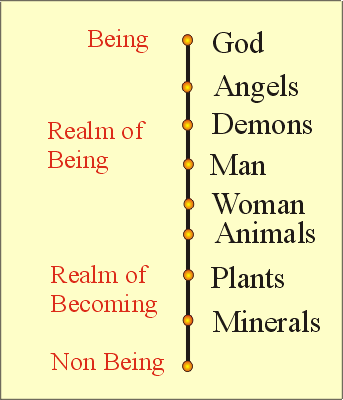
The Great Financial Chain of Being ~~ Shakespeare visualized


"William Shakespeare lived in an ordered universe. The moral philosophers of his day conceived of that universe as a Great Chain of Being.

...Classical economics has constructed something similar. The very wealthy, or the captains of industry, occupy God's rung on the ladder, followed by the CEO's, shareholders, etc. Mere "consumers" are the equivalent of inanimate objects." continue reading Prof. Owen Gray's The Great Financial Chain of Being

See also:

  • Evolution of Species. Darwinistic Ideas of Ancient Greeks

  • Shakespeare's Sonnet 17, Visualized
  • March 05, 2008

    Cook up some visual fun @ ImageChef.com

    [Info courtesy: Senior Friendly Libraries & NCS-Tech!
    Searching the web, blogosphere, listservs and the twitterverse for the best K-8 EDTECH resources, because..."You can't spell TEACH without T-E-C-H!" © 2008 Kevin Jarrett]
    And here is my visualization, based on ImageChef:


    personalized greetings


    February 25, 2008

    CERN photos in National Geographic:The God Particle

    [info courtesy: Xeni Jardin @ Boing Boing - A directory of wonderful things]


    "If you were to dig a hole 300 feet straight down from the center of the charming French village of Crozet, you’d pop into a setting that calls to mind the subterranean lair of one of those James Bond villains" ... continue reading At the Heart of All Matter @ Thoughts of a Seeker

    • See also in the same shelf: Go Inside the God Particle:
      See how physicists will use a giant atom smasher in hopes of finding the so-called God particle.

    January 06, 2008

    Ways to help fight the fat: Visual Discrimination

    Nov 10, 2007, Toronto Star

    Proposal: Legible labelling

    Labels detailing the calorie and fat contents of our food are far too complex, especially for the poor, who are more likely to be new immigrants or have lower educational levels. A simple colour code using red for "should not be consumed," orange for "consume in limited quantities," and green for "don't worry about it" is one workable solution, says Dr. John Frank, head of population and public health studies at the Canadian Institutes of Health Research.

    Pros: Such labels would leave little confusion about which foods were fattening.

    Cons: Determining which foods deserved to be red f... continue reading

    see also: color temperature color vision

    November 03, 2007

    Mapping the Unmappable: Visualization continues to advance

    Quotable quote of the year: 16 years ago today the word "Internet" first appeared on af ront page or cover of the major media: Wall Street Journal, Page One, the story about eBooks -- 29 Oct, 2007. Thus said: Michael S. Hart, Founder Project Gutenberg

    See in same shelf and aisle:


  • A looming legal crises on the Internet, MICHAEL RIGLER, The Western Star
  • October 10, 2007

    Web Analytics and Qualitative Insight: Listen.See.Smell.Taste.Touch

    PS. In the following is an attempt by an expert to demystify Web Analytics. While most often heard is why or the quantitative and that which tends to excite, herein is what or the qualitative insight--i.e., the other side of the coin.

    "2 Simple Steps to Finding Your Website's Voice" @
    GrokDotCom: byHolly Buchanan

    Posted in Branding and Advertising Rants | Persuasive Online Copywriting | Articles | Persuasive Copywriting | Customer Experience | Copywriting | Relationship Building

    "When you have a conversation with a human being (as opposed to having a conversation with a cat, which if you've ever owned one, you know how well that goes) you get a sense of that person's personality. The clothes they wear, their tone of voice, how they move, the words they use - all of this gives you insight into who the person is.

    Every website visit is a conversation. Think about it. The web is an interactive medium. Every time you click you ask a question. You interact with the company or brand. What kind of answers are you getting? Do you get a sense of whom you are talking to? Do you have any sense of who the company/brand is?

    I'm hearing a resounding answer of, "Not so much."

    Your design, images, and copy all combine to convey your company or brand's personality. Of all of these, I would argue that copy is perhaps the most important element for conveying your website's personality or voice. As a copywriter, there are two things you must do:

    1 - Have a clear understanding of your personality, brand or voice
    2 - Convey that personality, brand or voice to your audience

    Here are suggestions for how to accomplish this.

    Step One: How to clarify your company's personality, brand or voice ...

    Step Two: How to convey that voice in your copy ...

    click here and continue reading

    August 25, 2007

    Visual immersion using Web Analytics

    Practical analytics: persuasion scenarios
    @ immeria - An immersion in Web Analytics,
    by S.Hamel
    A typical site is composed of several conversion objectives: registering to a newsletter, purchasing something, finding the nearest store, or any activity that represent a positive outcome for the user and the site owner. As Brian Eisenberg puts it, those represents the "conversion points" of a "persuasion scenario":


    continue reading:

    Practical analytics: persuasion scenarios


    See also my previous posts:
  • Eye to I: Visual Literacy
  • Add Sense to your AdSense: Visualizing the Return on Investment?
  • Look and Feel of Browsers and Websites
  • Concept Mapping Technology - Tool to create HTML pathfinders?
  • Visualizing the Innernet or Visual Display of the Website's Infostructure - AHAREF
  • July 10, 2007

    Browse articles visually with WikiMindMap

    via Lifehacker by Adam Pash on Jul 09, 2007

    Web site WikiMindMap turns complex Wikipedia articles into a visual representations of ideas (i.e., a mind map) to give you an overview of the important concepts and topics related to an idea.

    Browsing a Wikipedia article with WikiMindMap may seem a bit confusing at first, especially if you don't regularly use mind maps, but it offers an interesting way to get a broad understanding of a topic and explore some of the related topics.


    see also:
  • Mind map - Wikipedia, the free encyclopedia
  • Using Mind Maps to Reach Visual Thinkers
  • Mindmapping as a tool for assignments
  • June 23, 2007

    Pay but don’t touch – Security, Satisfaction, and Expectation

    Arby’s rolls out ‘contactless’ payment cards
    By: Robert L. Mitchell
    Computerworld (US) (08 Jun 2007)

  • Are Contactless Payment Cards Tickets to Wholesale Fraud?
    By Jeff Chasney, CIO, CKE Restaurants, August 18, 2005
  • US heading towards cashless society - 01 May 2007 - Computing.co.uk
  • Key Changes Facing the Smart Cards Industry - the Contactless Payment Technology Opportunities, May 31, 2007, Business Wire
  • RFID Cards for New York Subway Tolls,
    Filed in archive Contactless Payment Systems by Anita Campbell on March 21, 2006
  • Contactless Credit Cards: Privacy Holes? October 24, 2006 [Radio Frequency Identification news] RFID Gazette: Applications

  • 'smart' city....what about citizens?
  • May 27, 2007

    Researchers Turn Web Blather to Books

    A Blather defined:
    "Blather is a user-contributed content website owned by and hosted on the new dream network (DreamHost). Words link to pages about other words, the difference being that nearly every word is a hyperlink. It serves many functions to its users, poetry and prose workshop, sharing ideas, political debates, or simply a message board. Blather has no implied or explicit purpose. Wiki"
    By JENNIFER C. YATES, Associated Press Writer, May 24, 2007
    Luis von Ahn, assistant professor of computer science at Carnegie Mellon University, poses on campus in Pittsburgh Wednesday, May 23, 2007. Researchers at Carnegie Mellon University, including Von Ahn, have discovered a way to enlist people across the globe to help digitize books every time they solve the simple distorted word puzzles commonly used to register at Web sites or buy things online.(AP Photo/Gene J. Puskar)
    A few simple keystrokes may soon turn blather into books.
    Researchers at Carnegie Mellon University have discovered a way to enlist people across the globe to help digitize books every time they solve the simple distorted word puzzles commonly used to register at Web sites or buy things online. Continue reading

    Info courtesy: ALLEN Reynolds

    May 05, 2007

    Web Analyst Interview: Apurba Sen


    Looking for information professionals @ linkedin who can connect information visualization and Web analysis, I found an interesting resource person. This person is Apurba Sen, and he was interviewed in the area of Web Analysis or Web Analytics, by Anil Batra. Read the interview: Web Analyst Interview: Apurba Sen